
















































Extreme Close-Ups Worth Lingering On: When Every Detail Becomes the Point
Most extreme close-up sequences announce their impatience within the first few seconds. The frame arrives, the surface appears, and almost immediately the camera begins to move again. Quick zooms, focus hunting, and premature cuts turn what could have been a sustained look into a brief accent.
The stronger work this year does the opposite. It treats the close-up itself as the subject. Close up pussy images that stay locked long enough for texture, moisture, and micro-shifts to register create a different kind of heat. The intensity is not declared. It accumulates because the detail is allowed to remain in view.
This is a technical decision as much as an aesthetic one. Soft directional light reveals surface information that hard light erases. Stable focus keeps the plane of interest sharp instead of constantly hunting. Locked framing gives the eye time to travel the actual form. When these choices are made deliberately, extreme close up pussy and detailed pussy close ups stop feeling like transitions and start feeling like the main event.
Why Most Close Up Pussy Sequences Leave Too Early
The most common failure is treating the close-up as a short stop on the way to something else. The camera arrives, the surface becomes visible for a moment, and then the frame pulls away or the focus begins to drift. The small changes that actually hold attention never get enough time to register. Texture remains unread. Moisture is only glimpsed. The micro-movements that signal response are cut before they can accumulate.
Closeup pussy pics that follow this pattern often look energetic in the short term and empty across the full sequence. The eye is never given the chance to settle. Once the habit of constant movement is recognized, many sequences that previously seemed adequate begin to feel incomplete. The detail was present. It was simply never allowed to become the point.
The Cost of Treating Detailed Pussy Close Ups as Accents
When the close-up is treated as an accent rather than the subject, the technical requirements change. Soft light is less carefully controlled. Focus is allowed to hunt. The frame is released the moment the surface becomes interesting. The result is a series of brief impressions rather than a sustained reading of the form. Extreme close up pussy work that refuses this habit looks quieter at first and more complete by the end. The difference is cumulative. One locked stretch of readable texture after another builds a sequence that rewards lingering instead of rushing.
Light That Reveals Surface in Extreme Close Up Pussy
Lighting decides whether the surface information is available at all. Harsh overhead or specular light flattens contours and blows out delicate highlights. Soft side light or diffused natural light does the opposite. It rakes across the form, picking up gentle transitions and the way moisture catches along edges. The surface becomes three-dimensional. Texture remains visible instead of being washed out or lost in glare.
This principle is consistent across macro and extreme close-up work. Side lighting reveals texture. Diffused light keeps highlights from erasing detail. Hard light can make the same surface look clinical or featureless.

For close up pussy and detailed genital close-ups, the practical consequence is immediate. When the light wraps rather than cuts, every small change becomes part of the image. When the light is hard or poorly directed, those changes disappear even if the camera stays locked.
Soft Directional Light Versus Flat Illumination
Flat, frontal illumination reduces the sense of volume. Soft directional light restores it. The difference is especially noticeable on surfaces that contain fine folds, subtle moisture, and micro-shifts. Extreme pussy zoom sequences that use soft directional light keep the form readable across longer takes. Sequences that rely on hard or overhead sources often lose the very information that would have justified lingering. The technical choice is simple. The visual result is not.
Consistency of Light Across the Frame
Even soft light fails if it is inconsistent. Hot spots or sudden fall-off pull the eye away from the center of interest. Detailed pussy close ups improve when the illumination stays relatively even across the area that matters while still providing enough direction to model the form. The goal is readability, not dramatic contrast. When the light is both soft and controlled, the surface information remains available for as long as the frame stays put.
Focus Behavior That Keeps Closeup Pussy Pics Readable
Stable focus is as important as good light. In extreme close-up work the depth of field is naturally shallow. Small movements of the camera or the subject can throw the plane of interest out of focus. Focus hunting compounds the problem. The eye is pulled away from the surface every time the lens searches for a new lock. The result is a restless image that never settles long enough for texture to register.
The stronger sequences keep the focus plane steady. Once the critical surface is sharp, the camera resists the urge to adjust continuously. Micro-movements are managed through stabilization or careful support rather than constant refocusing. Extreme close up pussy that maintains this discipline looks calmer and more deliberate. The surface stays available. The small changes remain visible.

Minimum Focus Distance and the Temptation to Get Too Close
Every lens has a minimum focusing distance. Moving past it produces blur no matter how carefully the shot is composed. In the desire for maximum proximity it is easy to cross that threshold.
The image softens precisely when the detail should be sharpest. Experienced macro and close-up work respects the limit. The camera finds the closest distance at which the surface remains crisp and stays there.
Clarity is prioritized over the illusion of greater closeness. Close up pussy sequences that observe this limit keep the texture readable. Those that ignore it lose the information that would have rewarded lingering.
Stabilization as a Practical Requirement
At extreme proximity even small camera movements are magnified. Handheld micro-tremors that would be invisible in a wider shot become obvious. Built-in or external stabilization helps, but the more important decision is to move less.
Locked framing reduces the need for constant correction. When the camera is supported and the operator resists unnecessary motion, the focus plane stays where it was set. Detailed genital close-ups and macro pussy photography benefit directly. The surface remains sharp. The eye is free to travel the form instead of compensating for shake.
Composition That Treats the Detail as the Entire Subject
Wide shots have their place, yet they cannot deliver the same information. Intimate anatomy shots and spread pussy details succeed when the frame is tight enough that the surface itself becomes the only subject. Clean edges keep secondary elements from competing.
The center of interest stays unambiguous. A slight change in angle can reveal a new line. A small adjustment in distance can bring a different texture into view. The best sequences remain alert to those opportunities without rushing them.
The composition decision is binary in practice. Either the close-up is the main event or it is a transition. Sequences that treat it as the main event keep the frame locked, the light controlled, and the focus steady. Sequences that treat it as a transition release those controls too early. The difference is visible within seconds.

Clean Edges and the Absence of Distraction
Busy or poorly controlled edges pull attention away from the surface. Extreme pussy zoom work improves when the frame boundaries remain simple. The eye stays inside the area that matters. Macro pussy photography that maintains this discipline feels more intentional. The detail is not competing with surrounding visual noise.
Angle and the Revelation of New Information
Small changes in angle can expose contours that a single viewpoint leaves hidden. The stronger sequences make these adjustments slowly and only when the current view has already been given time. Rapid angle changes produce the same restless effect as rapid cuts. Patience remains the governing principle. The frame moves only after the present surface has been allowed to register.
The Visual Attention Cycle in Extreme Close-Ups
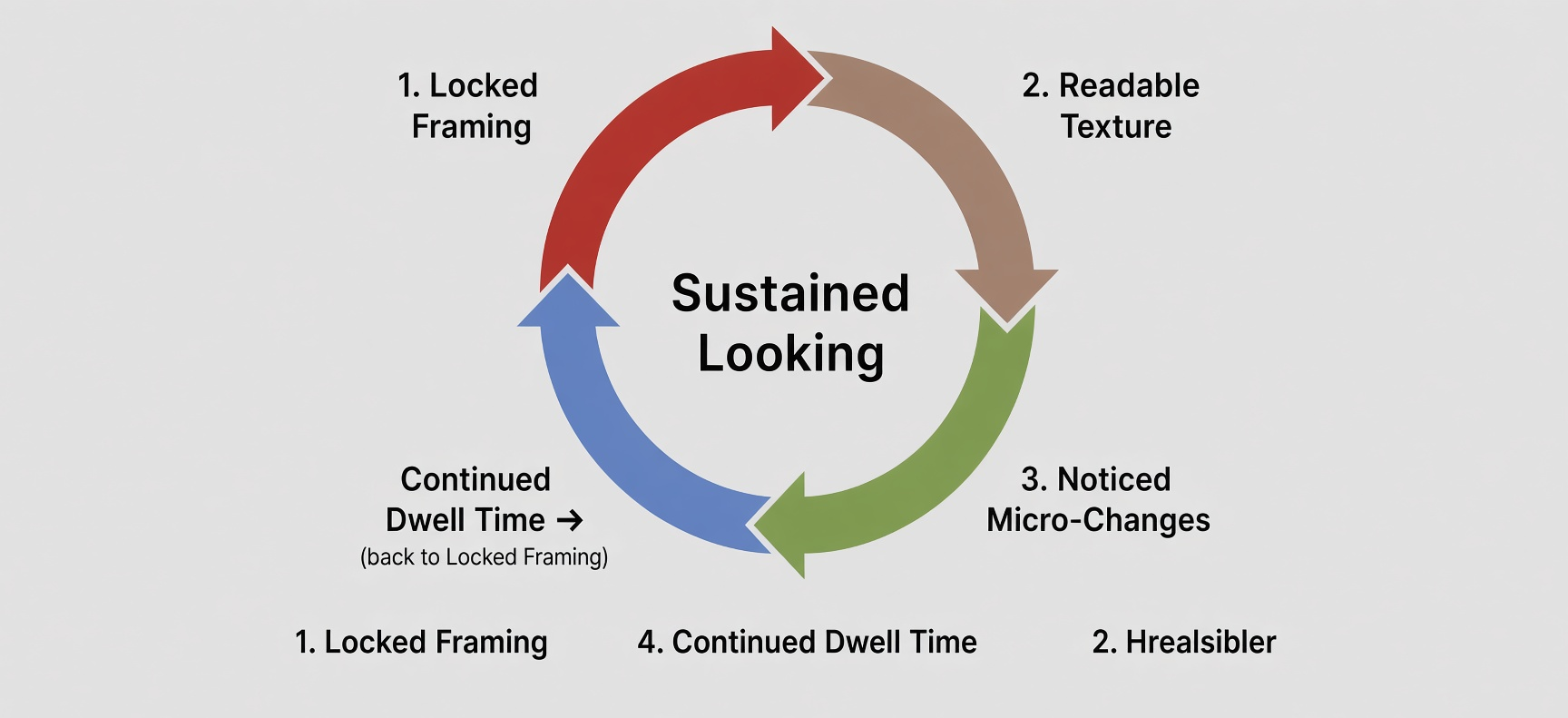
When the technical elements are handled correctly they form a reinforcing loop. Locked framing makes texture readable. Readable texture allows micro-changes to be noticed. Noticed micro-changes sustain viewer attention. Sustained attention makes further detail available. The cycle continues as long as the camera remains patient.
Habits That Still Weaken Close Up Pussy Sequences
Several technical habits remain common and consistently reduce the value of the close-up. The most frequent problems can be listed clearly:
- Crossing the minimum focus distance and producing blur at the moment of greatest potential detail
- Using hard or poorly directed light that flattens or blows out the surface
- Allowing continuous focus hunting that pulls the eye away every few seconds
- Cutting the moment the detail becomes interesting
- Relying on digital zoom that degrades resolution instead of revealing more information
Pussy close up work that avoids these errors looks quieter and more complete. The surface stays available. The small changes accumulate. The sequence rewards the decision to linger.
A second set of quieter but equally damaging habits appears just as often:
- Overlooking the background so competing elements enter the frame
- Introducing rapid angle changes before the current view has registered
- Allowing hot spots or uneven fall-off that distract from the center of interest
- Treating the close-up as a brief accent rather than the main subject
- Moving the camera simply because the operator feels the need to create energy
These secondary habits compound the primary ones. When several appear together the sequence loses the ability to hold attention across its full length.
Focus Hunting as a Persistent Problem
In shallow depth-of-field conditions the temptation to adjust focus continuously is strong. Each adjustment, however, resets the viewer’s attention. Extreme close up pussy sequences that resist the urge keep the plane of interest steady once it is established. The eye is free to explore rather than forced to re-acquire focus. The difference in perceived patience is immediate.
The Premature Cut
The moment the surface becomes interesting is precisely the moment many sequences leave. The cut feels energetic in isolation and costly across the full runtime. Sequences that stay past that moment allow the first impressions to deepen into sustained engagement. The technical decision is simple: do not release the frame the instant the detail appears. Give it time to register.

How Newer Extreme Close Up Pussy Work Differs in Practice
Older sequences frequently relied on rapid zooms, constant reframing, and exaggerated motion to create impact. Recent intentional work more often relies on stability, soft directional light, and the refusal to cut early. The framing is tighter and stays that way. The pacing is slower. The editing is lighter. Closeup pussy pics that follow the newer approach tend to feel calmer. The heat comes from the accumulation of readable detail rather than from forced movement.
The change is not absolute. Side-by-side comparison still makes it obvious. Sequences that continue to treat the close-up as a brief accent reveal themselves quickly under simple checks: does the frame settle, does the light wrap, does the focus stay locked, does the cut arrive too soon. Sequences that pass these checks hold attention longer and feel more complete from start to finish.
Practical Checks for Detailed Genital Close-Ups and Macro Pussy Photography
A short set of practical questions separates considered close-up work from rushed sequences. Does the frame lock long enough for the surface to become readable? Does the light wrap the form without creating harsh specular highlights or flat illumination? Does the focus remain steady once the critical plane is sharp? Are small physical shifts allowed to appear without the camera immediately moving on? Does the sequence resist cutting the moment the detail becomes interesting?
Sequences that answer most of these questions affirmatively tend to reward lingering. Intimate anatomy shots and spread pussy details that maintain the same discipline across their full length create a stronger overall impression. The checks are simple. Applying them while watching trains the eye to recognize the difference between presence and restlessness.

Readable Surface Information as the Goal
The ultimate test is whether the surface information is actually available. Texture, moisture edges, fine folds, and micro-movements should be visible and sustained. When they are, the decision to linger has a concrete payoff. When they are not, no amount of motion or cutting can restore what the light and focus failed to deliver. Extreme close up pussy that prioritizes readable surface information over energetic camera behavior continues to stand out for exactly this reason.
Care That Remains Consistent Across Settings
Intentional extreme close-up work can be produced in a simple room with soft window light or in a controlled studio. The setting matters less than the consistency of the technical decisions. Detailed genital close-ups shot with careful soft light and stable focus can outperform more elaborate productions that never settle. The common thread is attention to the surface itself. When the priority stays clear, location becomes secondary. A quiet environment with controlled light and a locked frame can produce stronger results than a complex set that treats the close-up as an afterthought.

Preference for Detail That Remains Honest
Viewers continue to respond to sequences that keep the actual surface visible. Intimate anatomy shots that preserve texture collect more sustained attention than heavily smoothed or restlessly framed alternatives.
Macro pussy photography that refuses to rush the early moments of the close-up tends to feel more direct. Spread pussy details that stay with the real form create a quieter kind of heat.
Close up pussy sequences that avoid forced movement hold longer. The preference is not new, yet recent intentional work has made the alternative easier to find. Honesty in framing, light, and focus creates a pull that lasts longer than energetic display.
You can feel the difference when the sequence stops trying to impress and simply stays with the surface.
That shift is what keeps certain extreme close-ups interesting long after the initial curiosity has passed. Lingering is not empty. It is the method that allows every detail to become the point.